For centuries, traditional cultures have revered liver and other organ meats for their incredible nutrient density and range of health benefits. While some may avoid these dishes due to unfamiliarity or even taste, liver remains one of the most nutrient dense superfoods on the planet, often being called “nature’s multivitamin” (Gupta, 2025).
Types of Liver Commonly Consumed
All types of liver are highly concentrated in vitamins and minerals (more than muscle meats, fruits, and vegetables), with plenty of protein, iron, vitamin A, and B vitamins. Some of the commonly available types of liver are (Bourg, 2025):
- Beef Liver: one of the most intensely flavored livers, and the most widely eaten. It’s often served in a classic liver and onions dish and comes from cows over a year old.
- Calf Liver: also known as veal liver, calf liver is very similar to beef liver and can also be cooked with onions. It has a slightly smoother and more tender texture, but comes from cows less than 1 year old.
- Pork Liver: this liver, that comes from pigs, has a more bitter taste, and is found in liver sausage in Germany, livermush in the American South, and often in traditional Chinese cuisine.
- Lamb Liver: this is the liver of a sheep less than 1 year old, and is often eaten fried along with other organ meats. It’s commonly consumed in New Zealand, Australia, and in some Indian and Lebanese dishes.
- Chicken Liver: since it’s milder in taste than beef or pork liver, it’s often more popular, and can be consumed chopped up, deep-fried, or even with pomegranate sauce as prepared in some traditional Lebanese dishes.
- Goose Liver: best known as an ingredient in the French dish, foie gras, it is made from the liver of geese or ducks that have been fattened. It can also be prepared by frying or pan-searing.
- Cod Liver: cod liver can be sold canned and eaten with bread or crackers, or consumed as cod liver oil in dietary supplements. You can also cook fresh cod liver.
Nutrition Profile of Liver
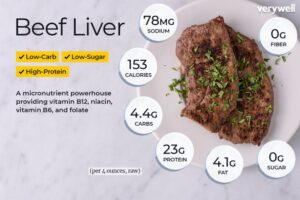
Liver’s nutritional profile is quite remarkable, as a 100g serving of beef liver, for example, contains (Rowles, 2024):
- Vitamin A: important for healthy vision, heart function, immune function, and reproductive health. Liver provides 104% of the daily value (DV) requirement.
- Vitamin B12: supports with the formation of red blood cells and DNA, and healthy brain function. Liver provides 2917% of the DV requirement.
- Riboflavin (B2): helps turn food into energy, and is also important for cellular development and function.Liver provides 261% of the DV requirement.
- Folate (B9): an essential nutrient required for cell growth, DNA formation, and fetal development. Liver provides 63% of the DV requirement.
- Iron: an essential nutrient that helps carry oxygen around the body. The iron in liver is also heme iron which is highly bioavailable (easily absorbed by the body). Liver provides 36% of the DV requirement.
- Copper: supports in activating a range of enzymes which can help regulate energy production, iron metabolism, and brain function. Liver provides 1578% of the DV requirement.
- Choline: important for liver function and brain development. Liver provides 77% of the DV requirement.
Liver also provides high quality protein, as for example, over one-quarter of beef liver is made up of protein. Since it’s an animal protein, it also provides all essential amino acids. High protein intake can aid in weight loss and also fuel muscle repair and energy.
Health Benefits of Eating Liver (Tran, 2025; Irvine et al., 2022):
- Supports Energy & Red Blood Cells: high concentrations of iron, vitamin B12, and folate in liver prevents conditions such as iron deficiency anemia, and megaloblastic anemia, that can cause weakness, tiredness, and low energy.
- Boosts Immunity: beef liver is a rich source of zinc and vitamin A which support the immune system in fighting off bacteria and viruses. The liver is also a valuable source of vitamin D which can also support in maintaining immune function.
- Promotes Healthy Skin: beef liver contains vitamin A which promotes the regeneration of collagen and skin elasticity. It’s also known for its antibacterial and exfoliating properties.
- Supports Brain Health: beef and chicken liver have high choline content which is known to support memory, mood regulation, and overall cognitive function.
- Enhances Muscle Recovery: liver is high in protein which is essential for repairing and building muscles.
- Provides Antioxidants: Coenzyme Q10, also known as ubiquinone, is a compound found in animal organs that has antioxidant and immune boosting properties, and can reduce inflammation.
- Supports Fertility & Pregnancy: Vitamin A supports reproductive health in both men and women, while folate and choline are crucial for long-term fetal development and cognitive outcomes in offspring.
Ways to Eat Liver
There are a range of ways to cook and enjoy liver, ensuring that we aren’t missing out on such a vital superfood (Phelps, n.d.):
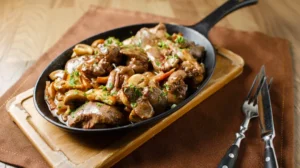
- Pan-Seared or Sautéed: classic liver pan-seared with onions, which can be served with rice and potatoes.
- Pâté or Spread: one of the most popular ways to eat liver, a finely ground and spiced mixture with butter and herbs, which can be spread over bread or crackers.
- Stews or Curries: diced livers can be added to traditional Indian or Pakistani curries to add flavor and nutrition.
- Ground into Meat Mixes: grounded liver can be mixed with grounded beef or chicken to form delicious yet incredibly healthy meatballs, burgers, or even tacos!
- Supplement Form: for those who are unable to tolerate liver’s distinct flavor, liver supplements are available to provide the range of nutrients without the taste.
A Word of Caution
It is important to note that because liver is so nutrient-dense, especially in vitamin A, it should be consumed in moderation. It should be limited to once per week, as excessive vitamin A consumption can impact the bones, leading to an increased risk of fractures. Pregnant women should also consult their doctor about liver consumption as excessive vitamin A consumption can lead to birth defects (NHS, 2023).
In Summary
Liver – whether from beef, chicken, lamb, or fish – is one of the most nutrient-packed superfoods out there, even more than some of the most popular superfoods such as kale or blueberries. It’s also versatile, and can be enjoyed traditionally with onions and rice, or in more creative ways such as in spreads or meatballs. From supporting energy and brain health, to boosting immune health, muscle recovery, and fertility, it truly is nature’s original superfood.
References
Bourg, M. (2025, August 9). Is eating liver good for you? Benefits and risks. WebMD. Retrieved September 8, 2025, from https://www.webmd.com/diet/liver-good-for-you
Gupta, S. (2025, July 31). The effects of eating liver. Everyday Health. Retrieved September 8, 2025, from https://www.everydayhealth.com/food-ingredients/the-effects-of-eating-liver/
Irvine, N., England-Mason, G., Field, C. J., Dewey, D., & Aghajafari, F. (2022). Prenatal Folate and Choline Levels and Brain and Cognitive Development in Children: A Critical Narrative Review. Nutrients, 14(2), 364. https://doi.org/10.3390/nu14020364
NHS. (2023, August 3). Vitamins and minerals – Vitamin A. NHS. Retrieved September 8, 2025, from https://www.nhs.uk/conditions/vitamins-and-minerals/vitamin-a/?utm_source=chatgpt.com
Phelps, N. (n.d.). Beef liver recipes – How to cook liver 10 ways. Discover Blog: U.S. Wellness Meats. Retrieved September 8, 2025, from https://discover.grasslandbeef.com/blog/beef-liver-recipes
Rowles, A. (2024, March 8). Is liver a superfood? Healthline. Retrieved September 8, 2025, from https://www.healthline.com/nutrition/why-liver-is-a-superfood
Tran, T. (2025, April 16). What happens to your body when you take beef organ supplements regularly. Verywell Health. Retrieved September 8, 2025, from https://www.verywellhealth.com/beef-organ-supplement-11710185